An archive or a library mostly holds paper, and paper reacts to the air around it. Temperature, relative humidity, light and air quality largely decide how many years a collection stays readable and usable. This guide gathers reference values published by institutions in the sector, explains why stability matters more than an exact number, and shows where shelving, boxes and the layout of the storeroom come in.
It also answers the question we hear most: what is the ideal temperature and humidity for an archive? The honest answer is that there is no single value. The sources we consulted point, for paper, to temperatures between about 18 and 22 ºC and relative humidity between 30% and 55%, depending on the institution and the type of material. What they all recommend is knowing your own space, measuring it and avoiding sudden swings.
Why the storeroom environment matters so much
Preventive conservation means slowing the deterioration of collections without touching the documents themselves: you act on the environment, the storage and the habits of the people who handle them. It costs less than restoration and protects every document at once, rather than one at a time.
A University of Coimbra study of the vault of the Biblioteca Geral notes that there is some consensus around temperatures between 18 and 22 ºC and relative humidity between 45% and 55% for library collections, but adds that there are no truly ideal values because every space is different. So the first step is not buying equipment: it is measuring through a full cycle of seasons.
Material from the Direção Regional do Arquivo e Biblioteca da Madeira adds a point that matters in Portugal: control should balance the nature of the collections with local climate, since in some regions of the country outdoor relative humidity is around 70%. A storeroom by the sea and one inland do not start from the same place.
Read the infographic as text
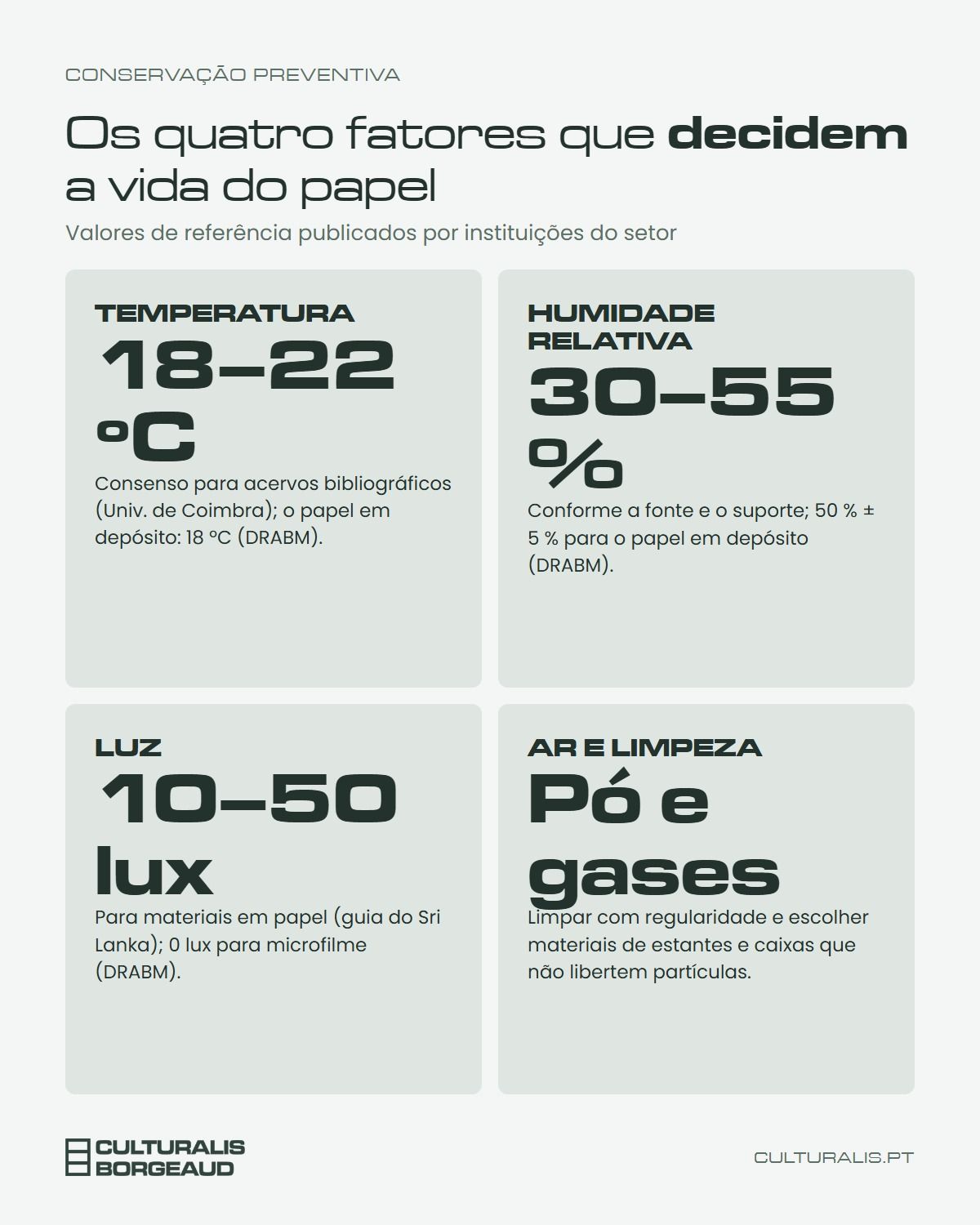
The four factors that decide the life of paper in an archive or library. Temperature: a consensus of 18 to 22 degrees Celsius for library collections, according to the University of Coimbra, and 18 degrees for paper in storage, according to the Direção Regional do Arquivo e Biblioteca da Madeira. Relative humidity: between 30% and 55%, depending on the source and the material, with 50% plus or minus 5% for paper in storage. Light: 10 to 50 lux for paper materials, according to the Sri Lanka guide, and 0 lux for microfilm. Air and cleanliness: clean dust regularly and choose shelving and box materials that do not shed particles. The golden rule is stability: avoiding swings matters more than hitting an exact number.
Temperature and humidity: reference values
The table below puts side by side the references we found in public sources. They are not mandatory standards and do not replace the recommendations of the body that oversees your archive: they help you grasp the order of magnitude and prepare the conversation with your conservation lead.
| Source and material | Temperature | Relative humidity | Light |
|---|---|---|---|
| DRABM – paper in storage | 18 ºC | 50% (± 5%) | — |
| DRABM – black-and-white photographs | 17–19 ºC | 30–40% | 0–50 lux |
| DRABM – microfilm | 2–4 ºC | 20–30% | 0 lux |
| Sri Lanka National Archives library guide – paper | about 18 ºC | 30–50% | 10–50 lux |
| University of Arkansas – paper collections | 18–21 ºC (65–70 ºF) | 30–50% (± 5%) | — |
| University of Coimbra – library collections (consensus) | 18–22 ºC | 45–55% | — |
Values taken from each institution's public material (DRABM from a poster of preservation parameters); always check the original source and the body that oversees your collection. ISO 11799 and the NISO TR01-1995 report also deal with the storage environment.
Source: Direção Regional do Arquivo e Biblioteca da Madeira (DRABM) and the other sources named in each row
Note that the humidity range for paper runs from 30% to 55% depending on the source, and that photographs and microfilm call for colder and drier conditions than paper. A storeroom holding several materials has to decide whether to separate them into zones or to give the most sensitive items their own solution.
The chart shows the difference between materials. The practical message is simple: know what you hold before fixing values. A municipal archive with case files, plans and photographs has different needs from a school library with everyday reading books.
Stability matters more than the exact number
The University of Arkansas conservation guide stresses that the absence of fluctuation within a range, and long-term averages, matter more than an exact temperature or humidity. In practice, a storeroom that always sits around 50% is better than one that swings from 30% to 65% within a few days, even if both hit the "right" value at certain moments.
- Measure before acting: one temperature and humidity logger per zone, for at least a year.
- Look for the cause of swings: windows, air conditioning that switches on and off, pipework, doors to the outside.
- Avoid abrupt corrections: fast changes can be harsher than a value that is slightly outside the range.
- Record and review: the data only helps if someone reads it regularly.
Light, dust and air quality
Light degrades paper, inks and photographs, and the effect accumulates. That is why reference material asks for low levels in storage areas: the Sri Lanka guide gives 10 to 50 lux for paper materials, and the DRABM poster suggests 0 to 50 lux for black-and-white photographs and 0 lux for microfilm. In practice, the storeroom should be dark when nobody is working in it, with lights on only while in use.
- Avoid direct sunlight on shelves, boxes and reading tables, using blinds or films, or by placing furniture away from windows.
- Switch storeroom lights on only when needed, and use presence sensors where they make sense.
- Clean dust regularly and with the right materials, because dust holds moisture and feeds pests.
- Keep food and drink out of the storeroom, and check for signs of insects or mould on every visit.
Air quality counts too: dust, fumes and gases from building materials, paints or cleaning products can affect paper. When a storeroom is renovated, it is worth asking which materials are used in shelving, boxes and finishes, and letting the space air out before the collection goes in.
Whatever the numbers you choose, write them down as the reference of your archive, together with the date of the last review and the name of the person responsible. This simple record turns good intentions into a routine that survives changes of staff and makes it easier to justify, to a funding body or a municipal council, why a given investment in the storeroom is needed.
Shelving, boxes and circulation: what furniture can do
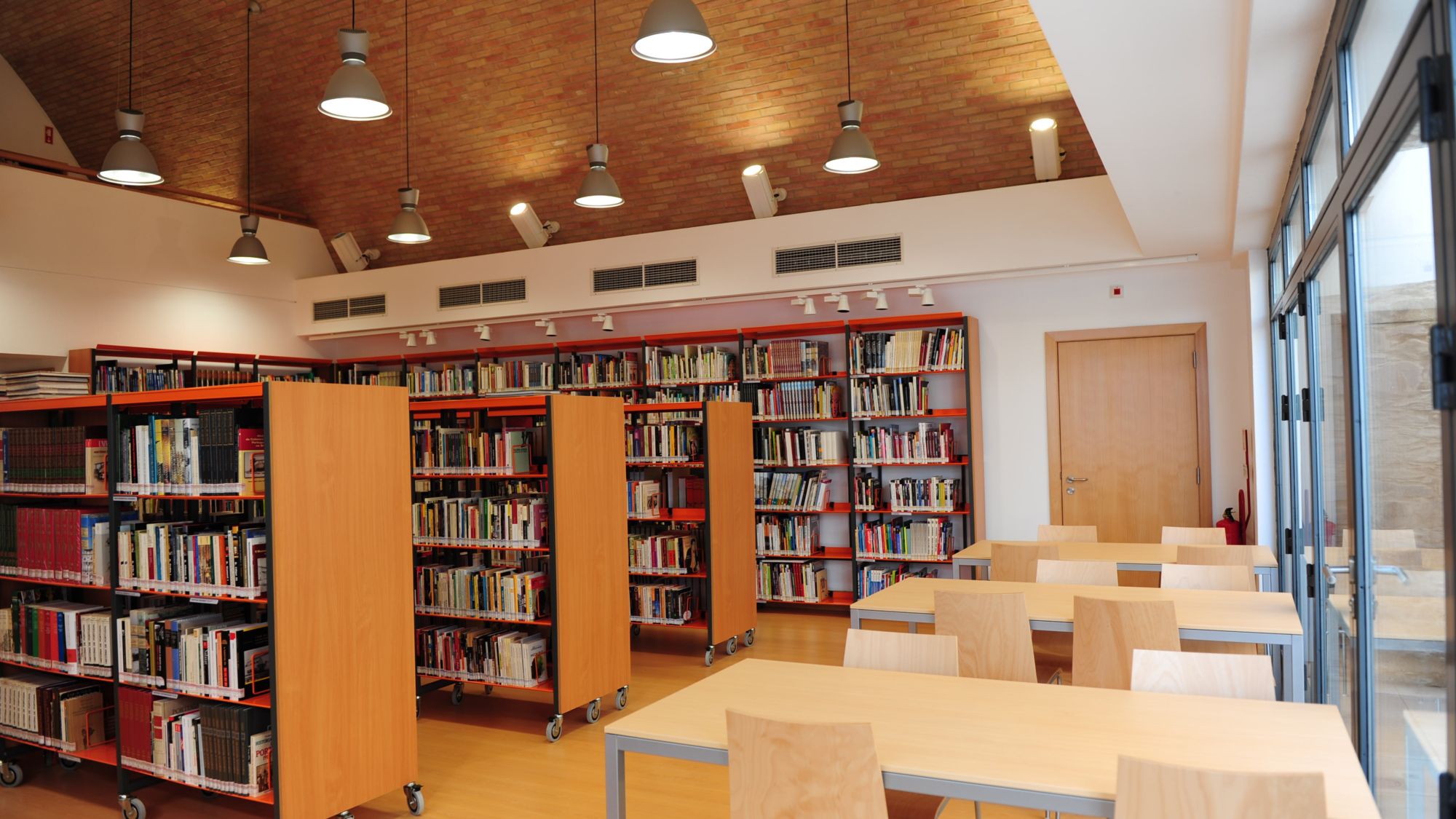
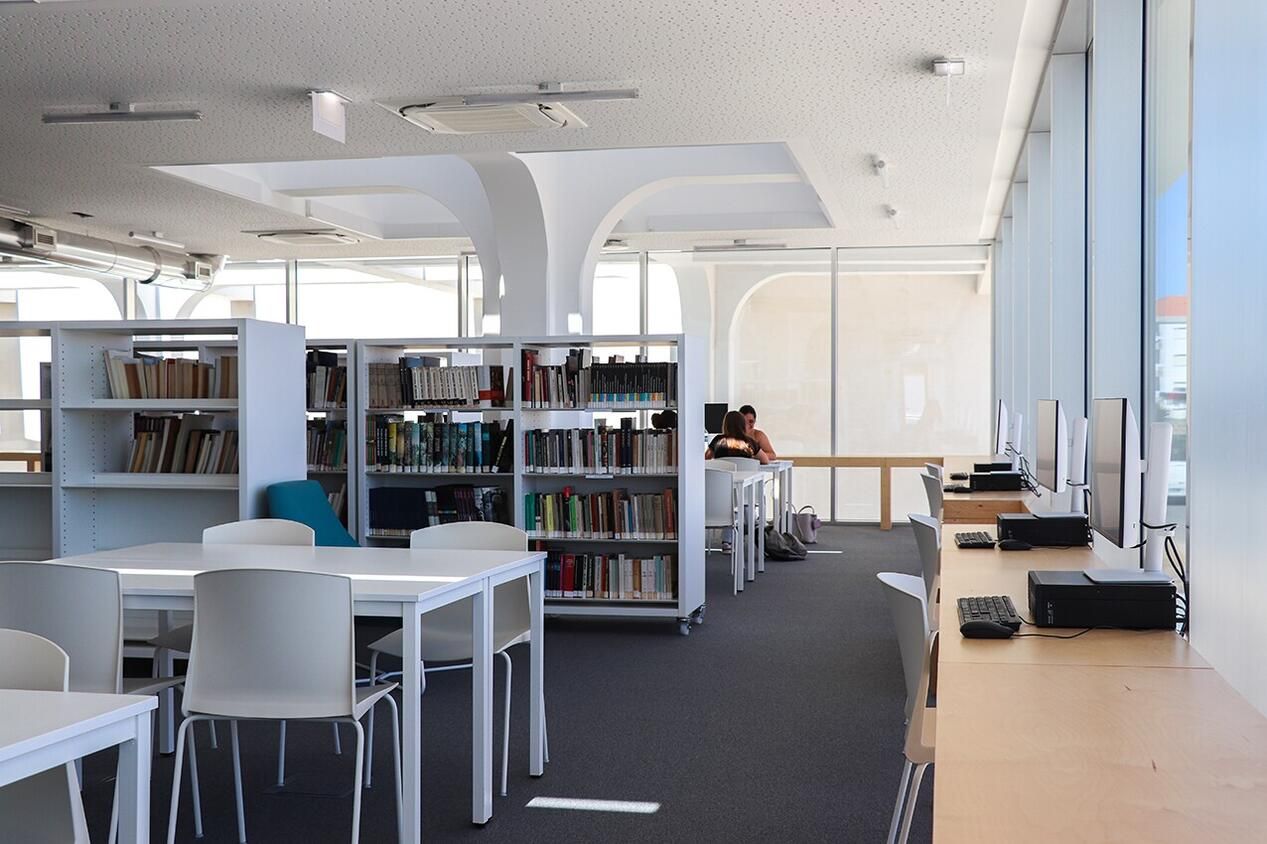
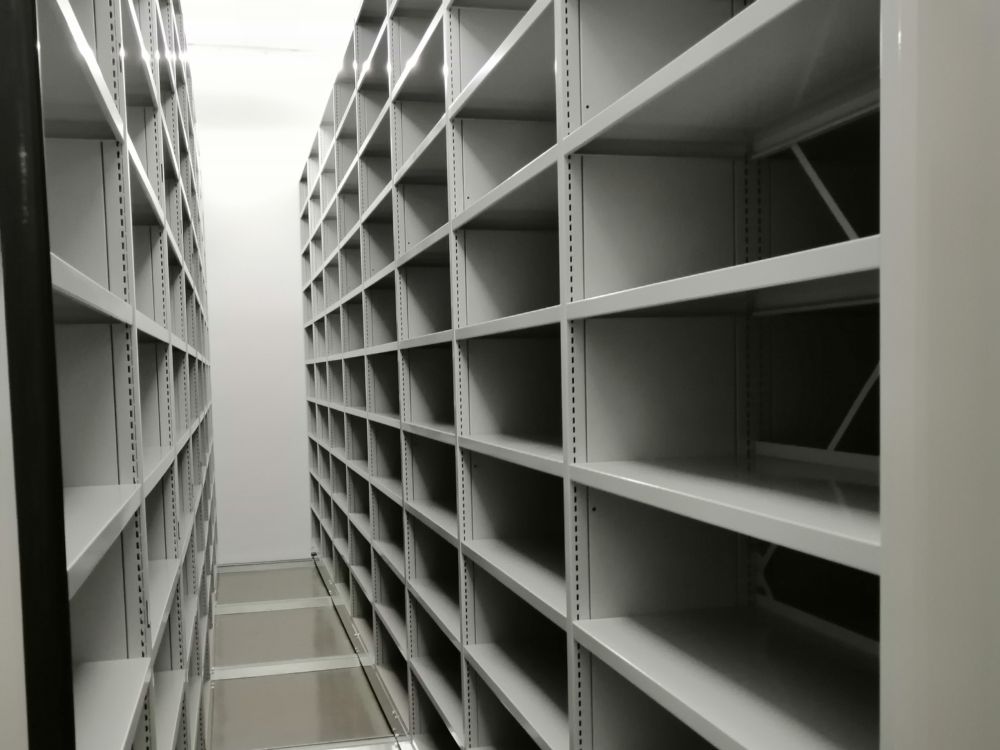
Furniture does not replace environmental control: a shelf does not lower the humidity of a room. But it can be chosen well or badly, and the choice affects how easy it is to clean, arrange, inspect and protect documents day to day.
- Stable finish: metal shelving with a good paint finish is easy to clean and does not shed wood particles or glues.
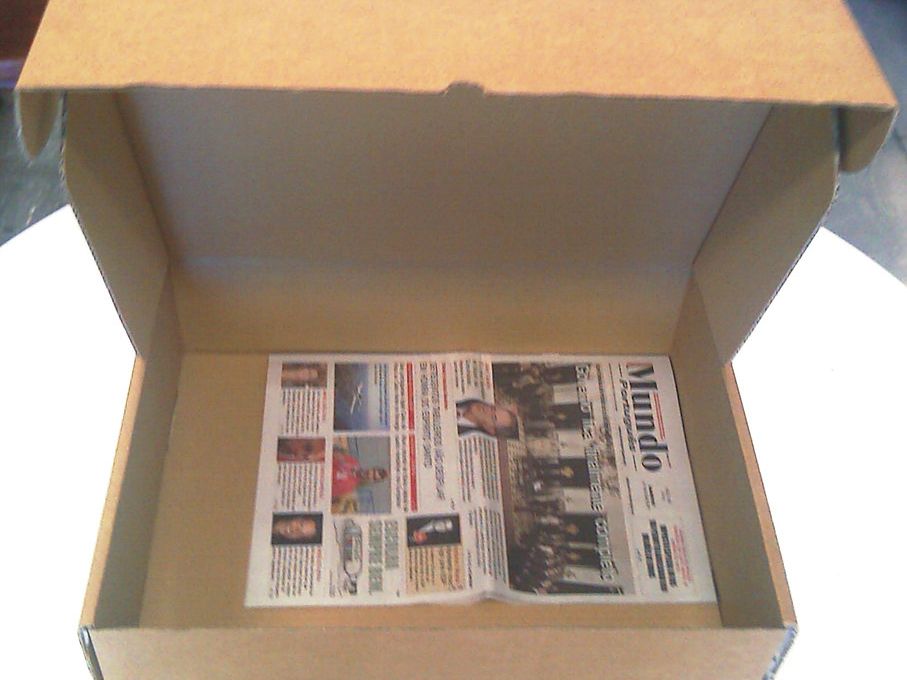
- Suitable archive boxes: they protect against light and dust and avoid direct contact between documents. Our library and archive consumables range includes boxes and conservation materials.
- Nothing on the floor: boxes should always sit above floor level, to protect them from small leaks and from cleaning.
- Adjustable shelves: they adapt to different formats without folding, over-stacking or forcing documents.
- Clear aisles: room to consult with both hands and to set a box down safely, away from pipes and radiators.
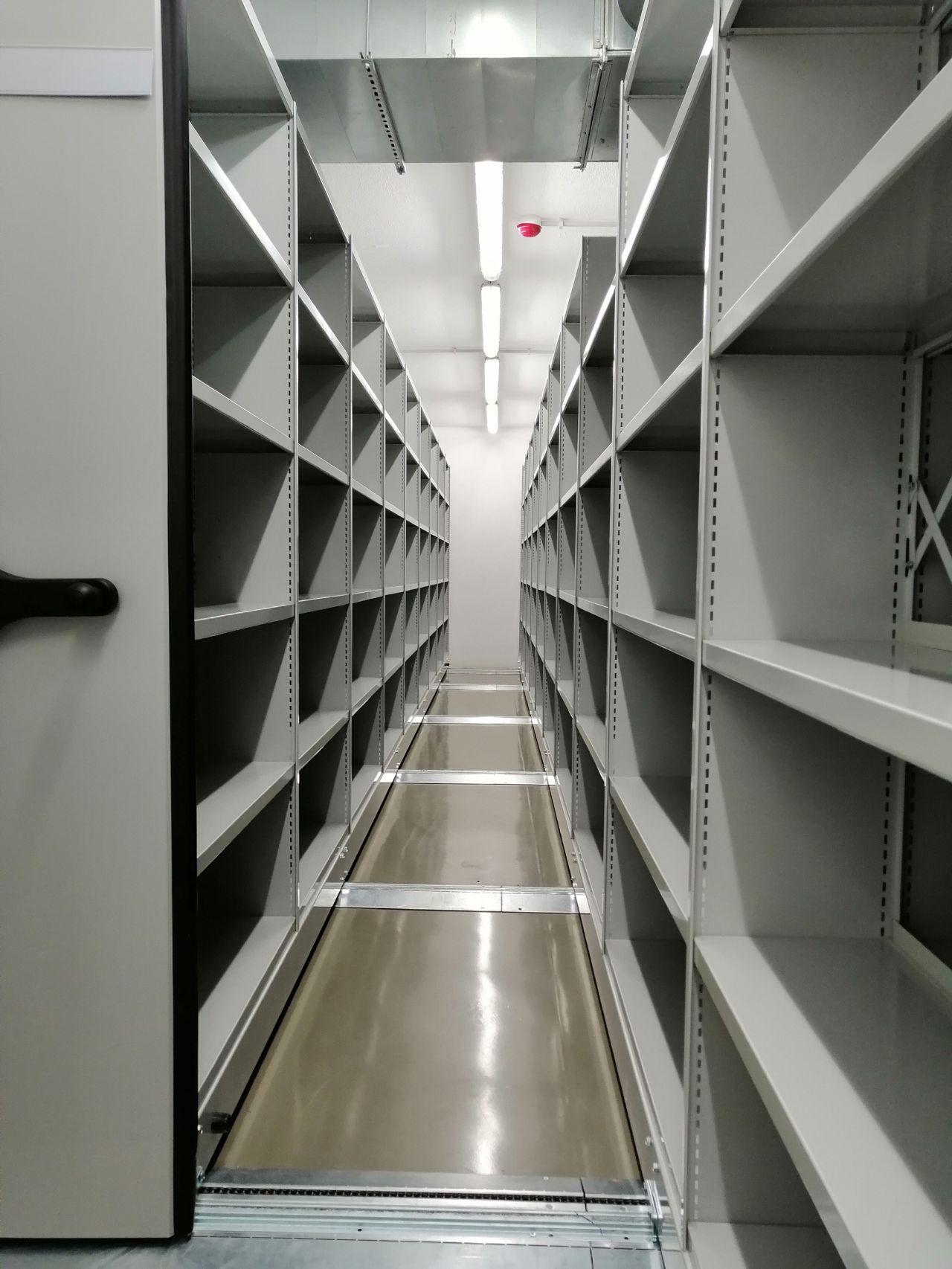
These decisions belong to the design of the space, not to a last-minute purchase. In a well-run study, shelf layout, aisle width, lighting and the position of the most-consulted documents are planned together.
Read the infographic as text
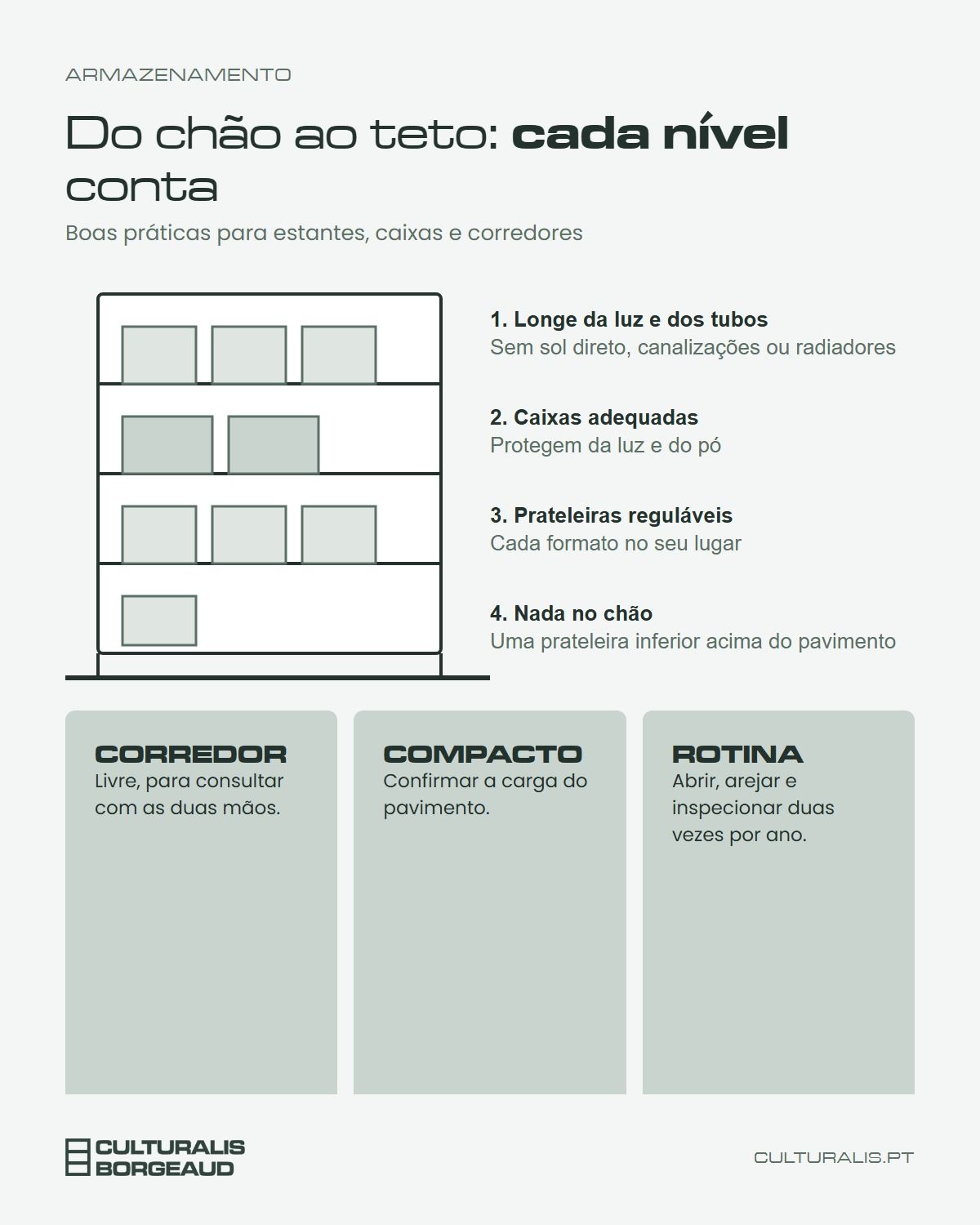
From floor to ceiling, every level counts. First, keep shelving away from sunlight and from pipes and radiators. Second, use suitable archive boxes, which protect against light and dust. Third, choose adjustable shelves so that each format has its place. Fourth, leave nothing on the floor: the lowest shelf sits above floor level. Aisles should be clear, so that documents can be consulted with both hands. With compact shelving, confirm the floor load with a structural engineer. The recommended routine is to open, air and inspect the storeroom twice a year.
Compact archive: more capacity, more care
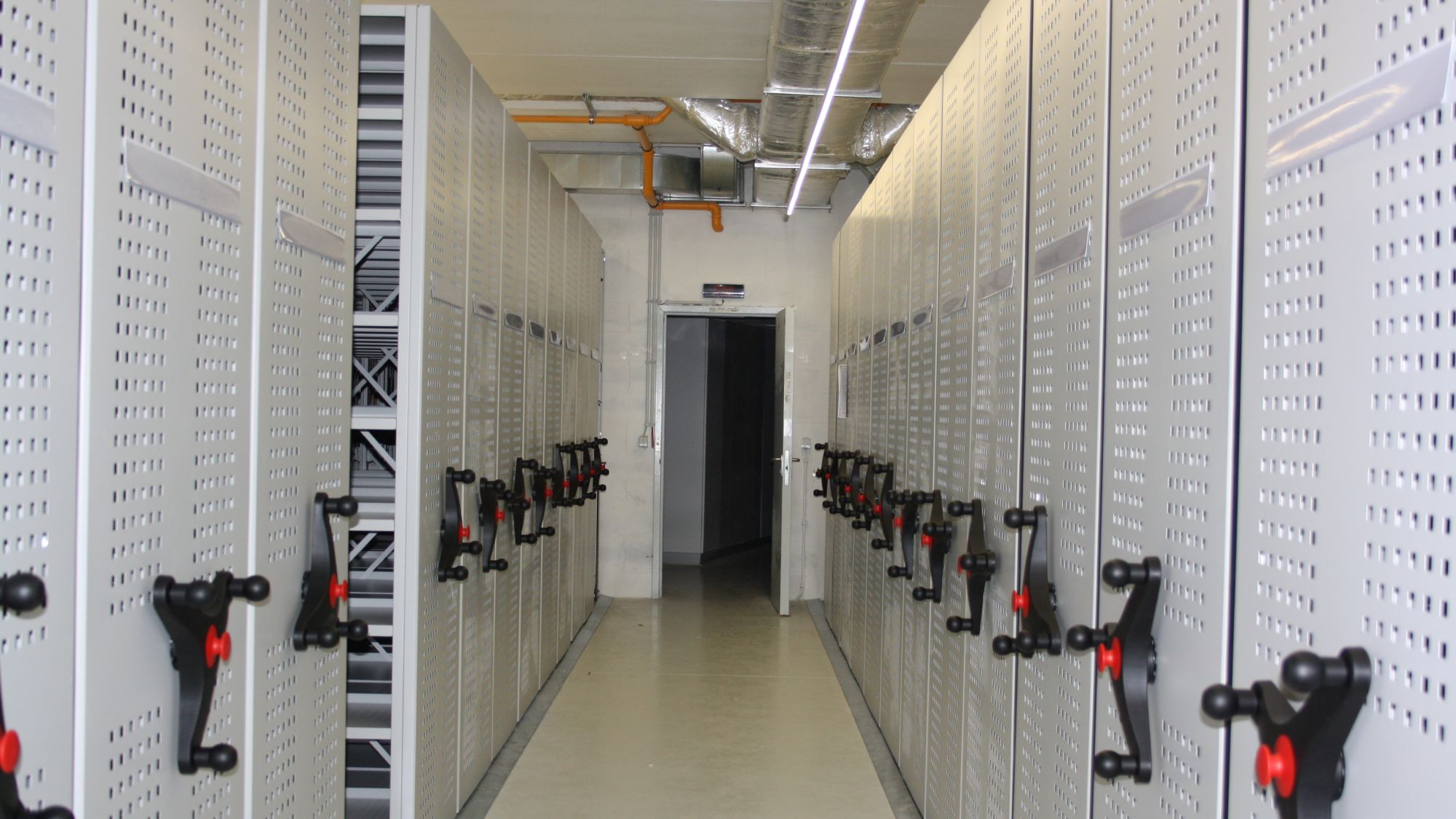
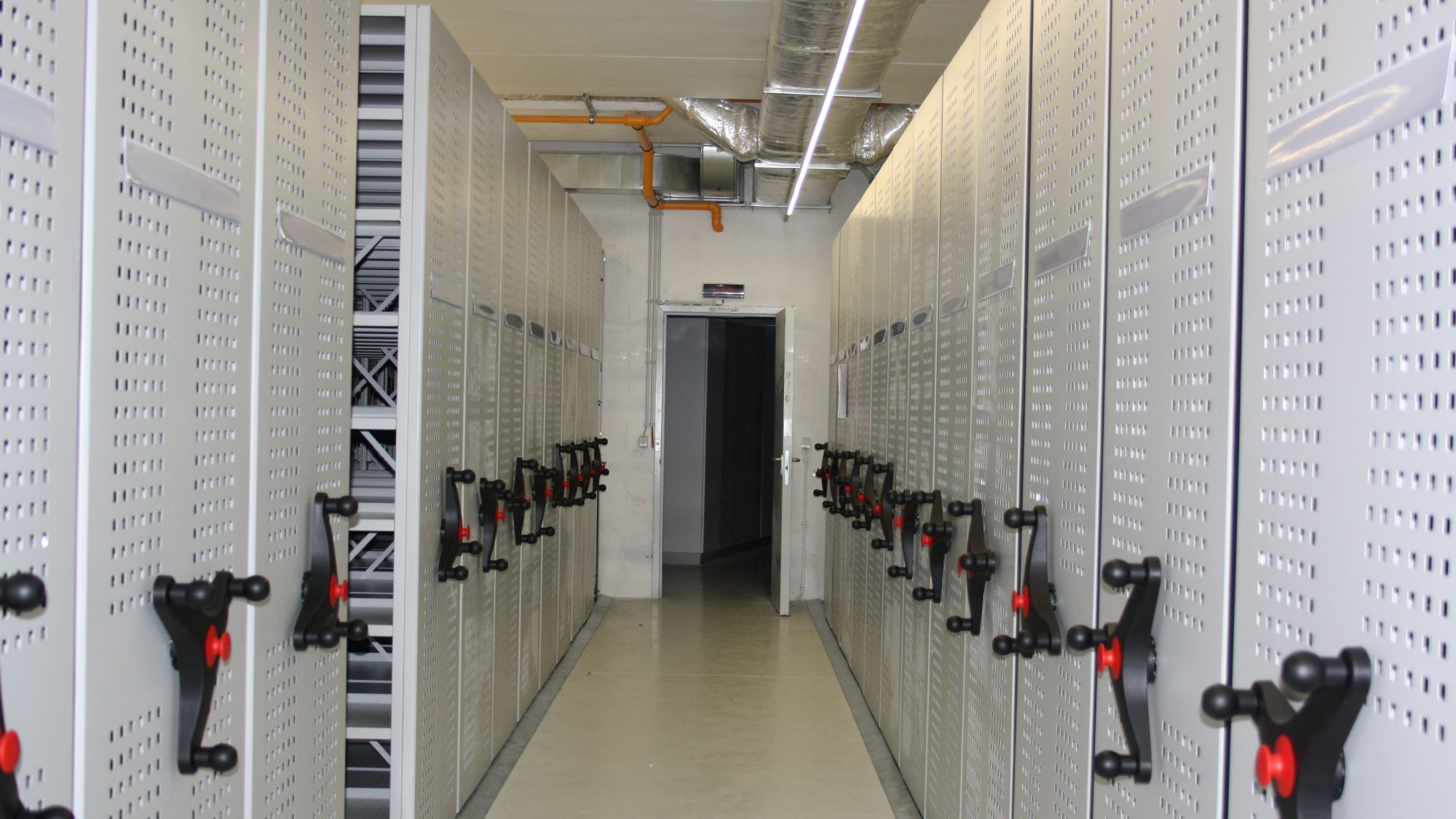
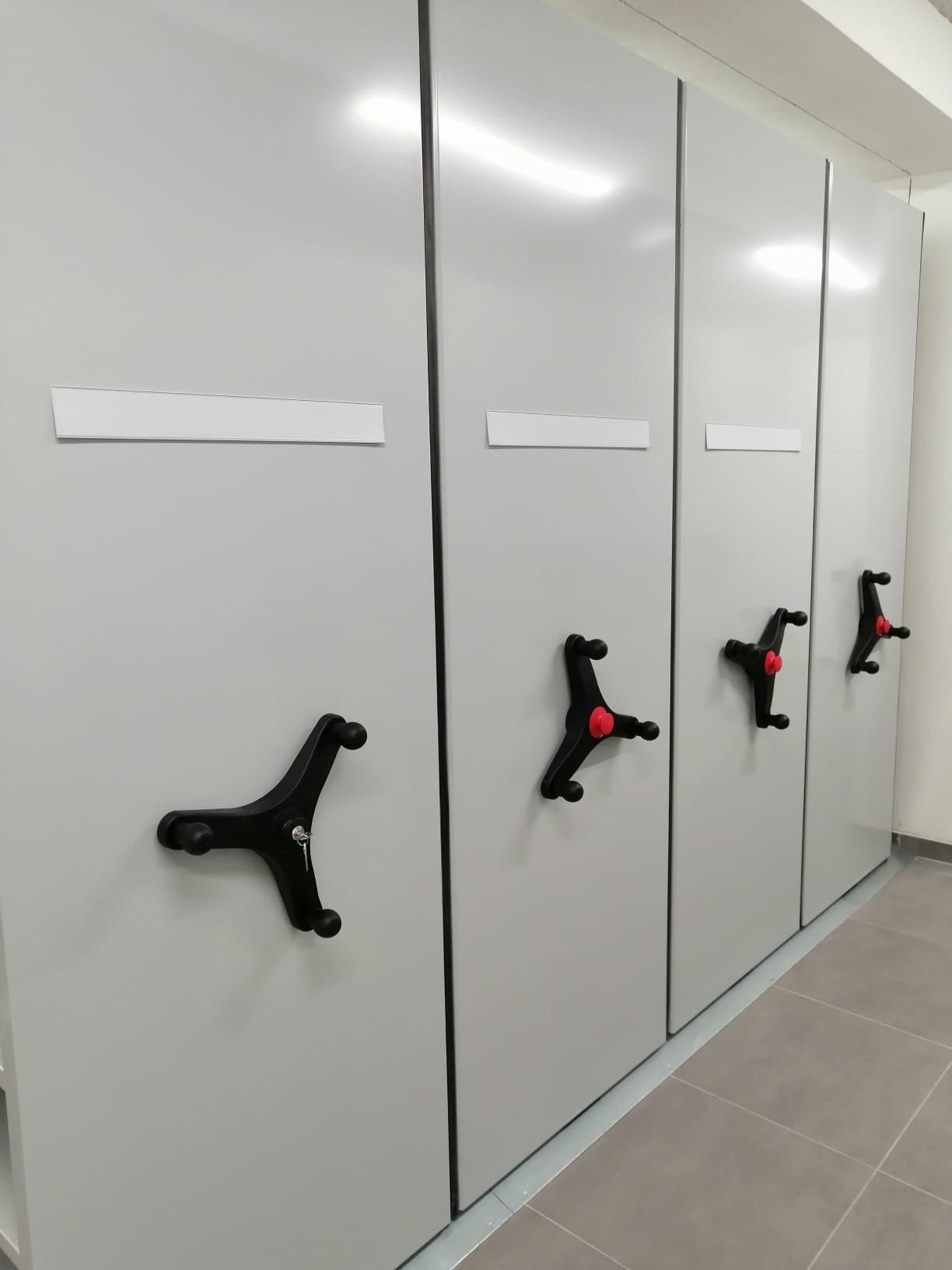
Compact shelving is mobile shelving on rails, operated with handles, that significantly increases archive capacity because it removes most fixed aisles. It is the usual solution when the archive is growing and the building is not. The Arquivo Distrital de Braga is an example of a project with mobile compact shelving with handles.
But a compact storeroom needs attention to a few points, best handled at the start of the project:
- Floor load: compact shelving concentrates a lot of weight in a small area. A structural engineer should confirm the floor capacity before the solution is chosen.
- Ventilation between shelves: when the shelves are closed, less air circulates between them. Set a routine for opening and airing them, and track humidity inside the storeroom.
- Humidity and pests: closed aisles hide problems. A periodic inspection with the shelves open lets you spot signs of mould or insects early.
- Safe operation: locking systems and good handling practice protect people and documents.
When well planned, a compact archive frees useful area for things that also protect the collection: a consultation area separate from the storeroom, a work bench and a quarantine space for incoming documents. See also our article Compact shelving: more space, better organisation.
A monitoring routine: what to do and how often
A simple plan that is followed is worth more than an ambitious one nobody keeps to. The proposal below is a starting point and should be adjusted to your archive and your team.
- Daily or weekly: inspect the storeroom visually (water, smells, lights left on, windows) and note the logger readings.
- Monthly: download the logger data and look for swings; clean the surfaces most exposed to dust.
- Twice a year: inspect boxes and shelves for mould, insects and damage; open and air the compact shelving.
- Once a year: review the plan, the reference values and the space needs with whoever runs the archive.
ISO 11799 covers the long-term storage conditions for archive and library materials, and the NISO TR01-1995 report proposes environmental guidelines for storing paper records. They can support the design or renovation of a storeroom, always in coordination with the body that oversees the archive.
- in the market, since 1990
- Over35years
- libraries equipped in Portugal
- Over300
Source: Culturalis Borgeaud
Checklist: is your storeroom well prepared?
Use the list below for a first diagnosis. It is not an audit and does not replace a conservation report: it is a quick way to see what is already done and what is missing.
Tool
Quick storeroom check
Tick what already applies in your archive or library.
0 of 10
A guiding list, not an audit. For a full diagnosis, consult a conservation specialist.
Next steps
If you have an archive or a library to renovate or extend, these are the most useful steps, in this order:
- Measure the storeroom environment through a full cycle of seasons.
- Identify the materials you hold and the reference values that go with them.
- Fix the causes of swings before buying new equipment.
- Plan the furniture together with circulation, light and ventilation.
- Set a monitoring routine and decide who carries it out.
Culturalis accompanies each project from the first study to the final installation, with its own team. You can see real projects, browse the catalogues and the library furniture, or contact us for a study of your space.